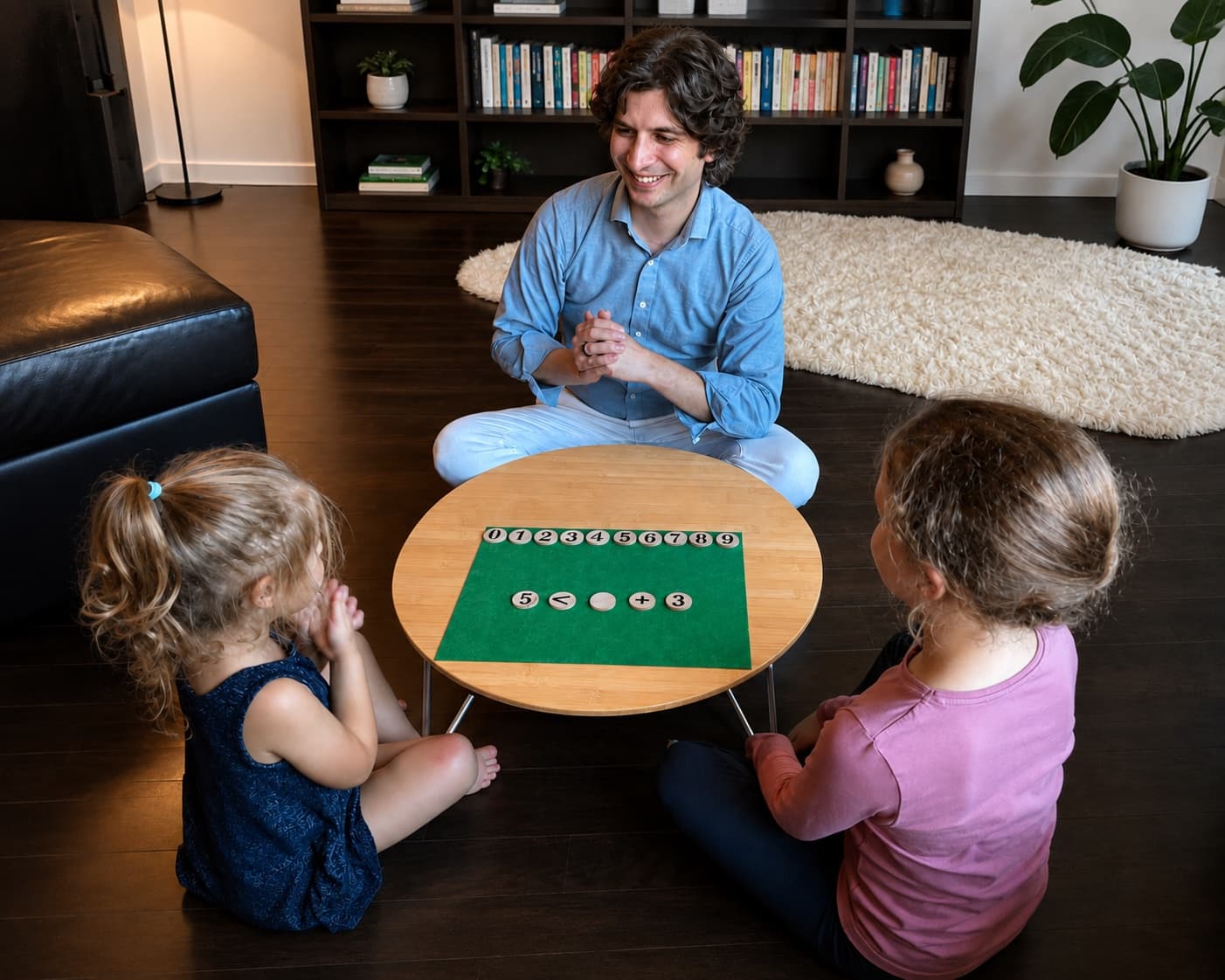
While studying math at the University of Chicago, I worked in the Young Scholars Program to support Chicago's strongest math students and tutored in South Side neighborhoods to support the most struggling schools. My experience with the students matched what research has shown: frequent, tailored, small-group instruction led to massive, easy-to-see growth.
At the same time, there were millions of children I didn't see who had potential far beyond their educational options. I searched for a scalable solution, and when I found a non-profit building AI expert systems in math instruction, I joined as a curriculum developer. I studied with methodologists abroad, ran the first pilots with my students, built their teacher professional development, and worked with hundreds of schools as I grew into the organization's VP of Program. I then combined this work with my deepened knowledge of methodology to lead the organization's product management.
I confirmed in that role a suspicion I held since I started tutoring: a child's ability in math says much more about the intentionality, methods, and rigor of their education than the child's innate aptitude. Our students succeeded in math because our products drew from a century of collaboration between the world's best mathematicians, educators, methodologists, and cognitive scientists. Unfortunately, few have access to this standard of methodology, and instead of seeing the deficiencies in their education, children think they're not math people.
Nothing close to that caliber of instruction existed in the small-town schools where I grew up, but before grade school, I had the incredible fortune of attending a Montessori school. Now understanding the significance of methodology, I wanted to return to it and learn how it designed materials to concretize concepts, how it adapted its approach across ages, and how it nurtured a love for learning and work that has stayed with me since I was three. I left my role to immerse myself in it again, becoming Director of Curriculum for the world's largest Montessori network while pursuing an AMI Certification in Elementary education.
As my Montessori knowledge and experience grew, I became VP of Research and Development and started the Prepared Montessorian Institute to train Montessori guides for infants to adolescents. In parallel, I researched effective methods compatible with the Montessori pedagogy to drive the organization's tutoring approach and expansion.
This return to tutoring coincided with a new wave of powerful AI tools that held incredible potential for education if used in service of academic rigor, proven methods, and cognitive development. However, I worried, for my own children and for education's trajectory, that this wouldn't happen on its own, and instead of sharpening focus, the technology would just appease an assumed lack of it.
I studied these new AI tools where their applications were pioneered, working with major companies on their AI pilots, running academies on how the tools work under the hood, and designing their expanded implementations. I learned the strengths and shortcomings of machine learning to develop a pedagogically sound architecture for education and began building it.
These two decades of research and experience formed the foundation of AI Tutoring: a tool that makes personal tutoring accessible without sacrificing instructional integrity or respect for the child's mind.
If you have any questions, suggestions, or ways to support this effort, email me at steven@aitutoring.org.
Steven
Founder of AI Tutoring